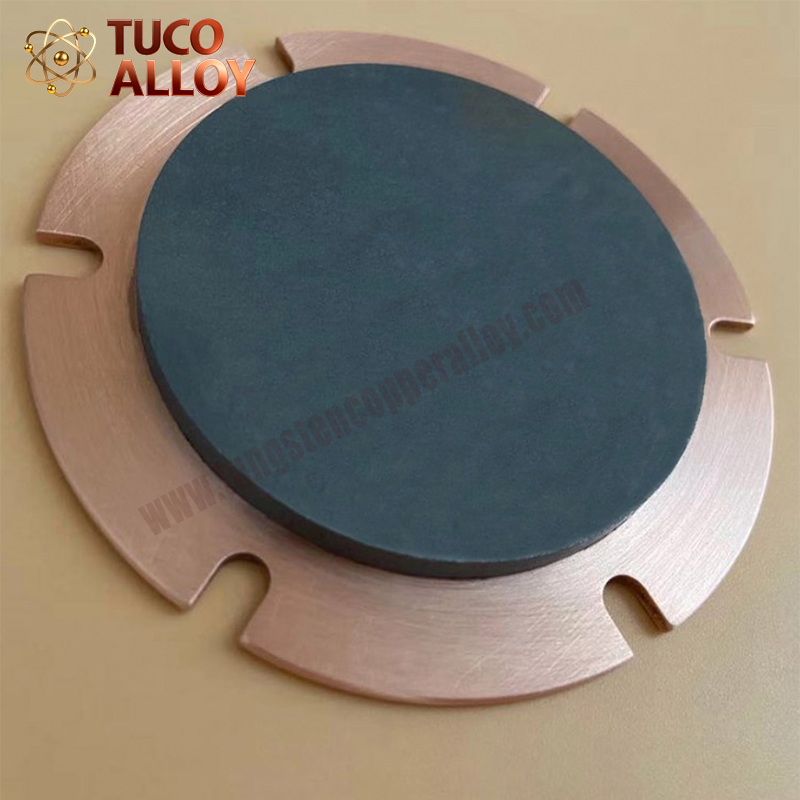
Introduction to Cu2S Cuprous Sulfide Sputtering Targets
Cuprous sulfide (Cu₂S) is an important inorganic compound with extensive industrial application value. High-purity cuprous sulfide targets—particularly those with a purity of 99.99%—are primarily used in the preparation of functional thin films. The production process for such targets is complex and places high demands on raw materials and equipment, requiring a rigorous quality control system to ensure the performance of the final product.
The performance of cuprous sulfide targets is primarily determined by several key parameters, which directly influence their behavior in applications.
1. Purity
Purity is the primary indicator of the quality of cuprous sulfide targets. A purity level of 99.99% means that the total impurity content in the material does not exceed one part in ten thousand. High purity helps ensure that impurities are not introduced into the film during the deposition process, which could otherwise compromise the film's electrical or optical properties. Common impurity elements include iron, nickel, and oxygen; the presence of these elements can alter the conductivity type or carrier concentration of the cuprous sulfide.
2. Density
The density of a target material directly affects its electrical conductivity and mechanical strength. High density implies low internal porosity, which is crucial for maintaining a stable discharge and a uniform erosion rate during the sputtering process. The theoretical density of a cuprous sulfide target is approximately 5.6 g/cm³, and in actual production, it is typically required to reach at least 95% of this theoretical value.
3. Grain Size
Grain size affects the sputtering rate of the target and the uniformity of the thin film. Fine grains facilitate the formation of uniform films, but excessively small grains may lead to reduced target strength. Typically, the average grain size of copper(I) sulfide targets is controlled within the range of a few tens of micrometers.
4. Compositional Uniformity
Compositional uniformity refers to the degree of evenness in the distribution of copper and sulfur throughout the target material. Non-uniform distribution can cause the thin film's composition to deviate from the stoichiometric ratio, thereby affecting its performance. Optimizing the synthesis and sintering processes ensures compositional consistency across the target.
5. Electrical Properties
Cuprous sulfide is a p-type semiconductor material; its electrical conductivity, carrier concentration, and mobility are important electrical parameters. These parameters are closely related to the material's purity and crystal structure and are particularly critical for its application in electronic devices.
Application Scenarios for Cuprous Sulfide Targets
Cuprous sulfide targets are primarily used in physical vapor deposition techniques, such as magnetron sputtering, to fabricate functional thin films. Due to their specific electrical and optical properties, these thin films find applications in various fields.
1. Optoelectronics
Cuprous sulfide thin films exhibit excellent light-absorption properties, making them suitable for use as the absorption layer in solar cells. Produced via sputter deposition, these films can convert solar energy into electricity; their relatively low cost makes them ideal for large-scale manufacturing. The material is also applicable to devices such as photodetectors.
2. Electronic Devices
In the electronics sector, cuprous sulfide thin films are used to fabricate components such as thin-film transistors and transparent electrodes. Their semiconducting properties allow them to function as active layers in switching circuits. By adjusting film thickness and composition, their electrical characteristics can be tuned to meet the specific requirements of various devices.
3. Energy-Saving Glass Coatings
Cuprous sulfide thin films possess infrared-reflective properties, making them suitable for energy-saving coatings on architectural glass. Such coatings help retain indoor heat during winter and reflect a portion of solar radiation in summer, thereby reducing energy consumption for air conditioning.
4. Other Industrial Applications
Beyond the aforementioned fields, cuprous sulfide targets are used to produce catalysts, sensors, and more. Their surface characteristics allow them to serve as catalyst supports in certain chemical reactions. Thin-film sensors based on cuprous sulfide can be utilized to detect specific gases or humidity levels.