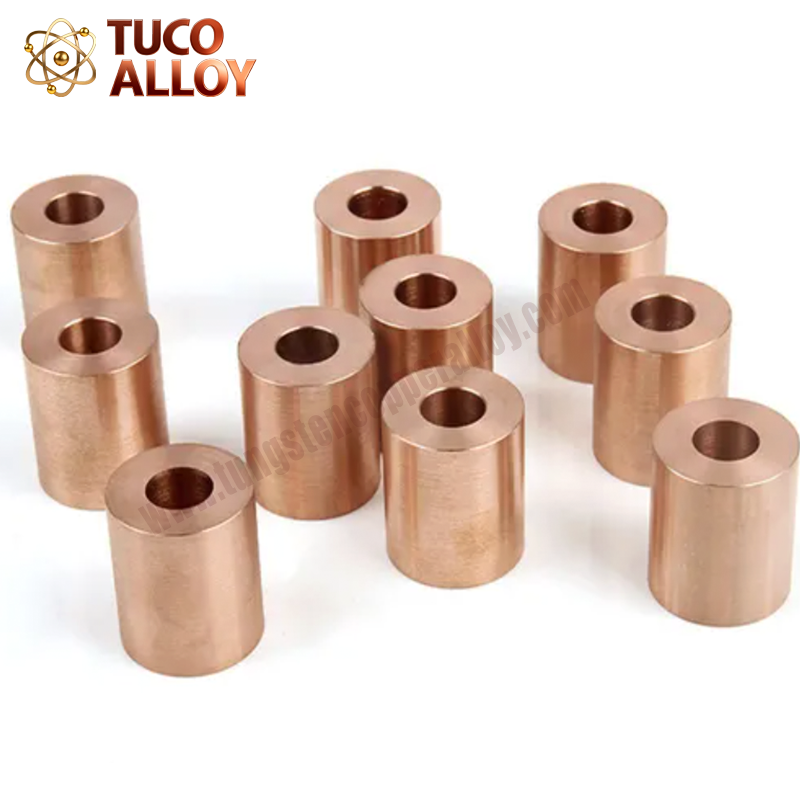
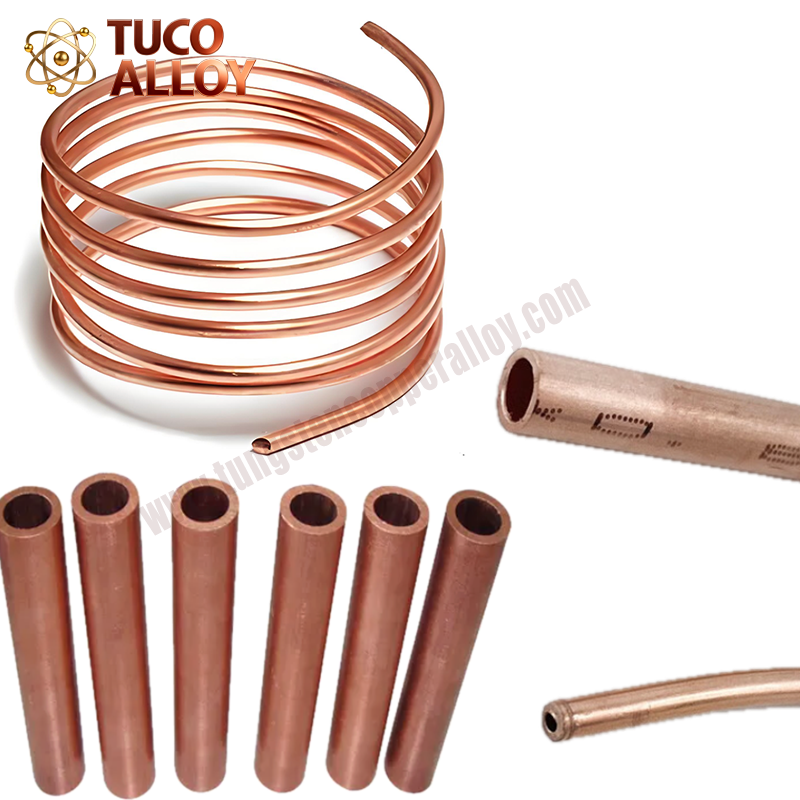
Tungsten Copper Tube
When making Tungsten-copper alloy tubes, high-purity Tungsten (boiling point) and Copper (3410℃) powders are used and processed through powder metallurgy techniques. Along with Copper's marvellous electrical and thermal conductivities, Tungsten's high strength and high melting point properties are combined. The alloy has a density of 13.8-14. g/cm³, a softening point of 700°, thermal expansions of 42% IACS, and good performance of arc breaking, low thermal expansion, and poor thermal expansion. The alloy also has low arcing and thermal expansion conductivity. and good performance of arc breaking, low thermal expansions, and poor thermal expansions. The alloy also has low arcing and thermal expansion conductivity. and good performance of arc breaking, low thermal expansions, and poor thermal expansions. The alloy also has low arcing and thermal expansion conductivity. and good performance of arc breaking low thermal expansions, and poor thermal expansions. The alloy also has low arcing and thermal expansion conductivity.
Tungsten Copper Tube Manufacturing Process
The first step is formulating tungsten and copper, after mixing high-purity tungsten powder with a diameter between 1.0 and 10.0 μm, and electrolytic copper powder with a size ranging between -400 and - 100 mesh. The subsequent steps include:
1. Compression Moulding. This comprises static pressing and plasticising extrusion, which implement the moulding techniques. The density of the green body is proportional to the density of the final product.
2. Sintering Process. The value of 1300 - 1500 °C is a predetermined temperature where the process is executed. Oxygen is eliminated in stages by initially sintering, and the final sintering is performed in a vacuum between 1100 - 1380 °C to achieve a density target of 96 - 99 %.
3. Solution Infiltration Technique. The first step to densifying precision tubes with 0.1 - 10 mm inner diameters is the infiltration of the tungsten framework with molten copper to achieve the desired molten copper.
4. Binder System. The wax-based binder system, which includes polyethene, paraffin wax, and ethylene vinyl acetate copolymer, aids in the green body strength and the rheological properties.
Tungsten Copper Tube comes with numerous benefits compared to other materials:
- Exceptional electrical and thermal conductivity
- Enhanced tensile strength and increased hardness
- Unequalled corrosion resistance even under high temperatures
- Stability with elevated temperatures
- A low coefficient of thermal expansion
- High machinability and formability
- An affordable option in place of stainless steel, aluminium, or ceramic alloys