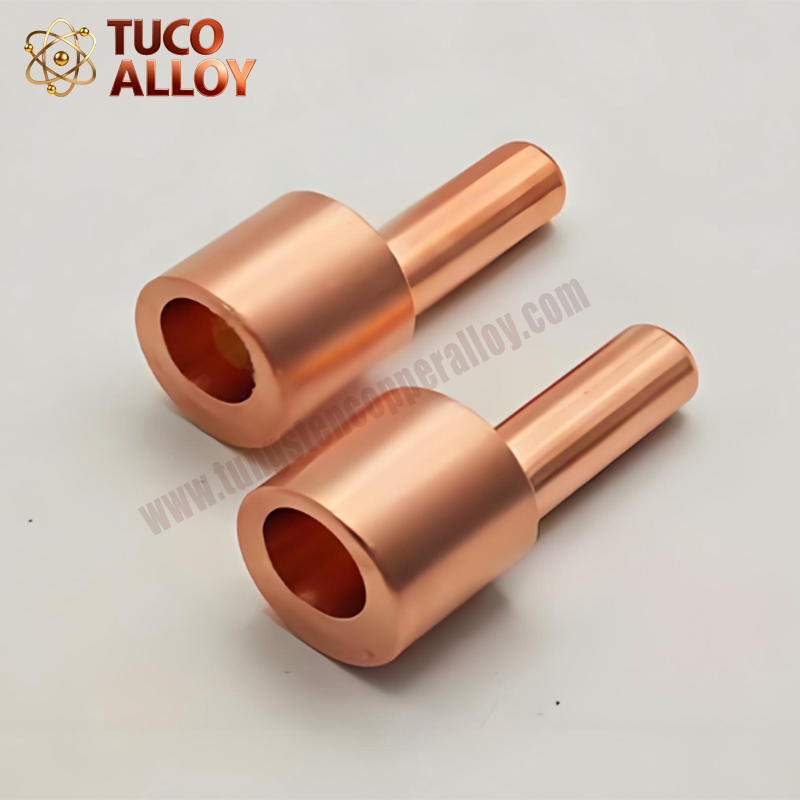
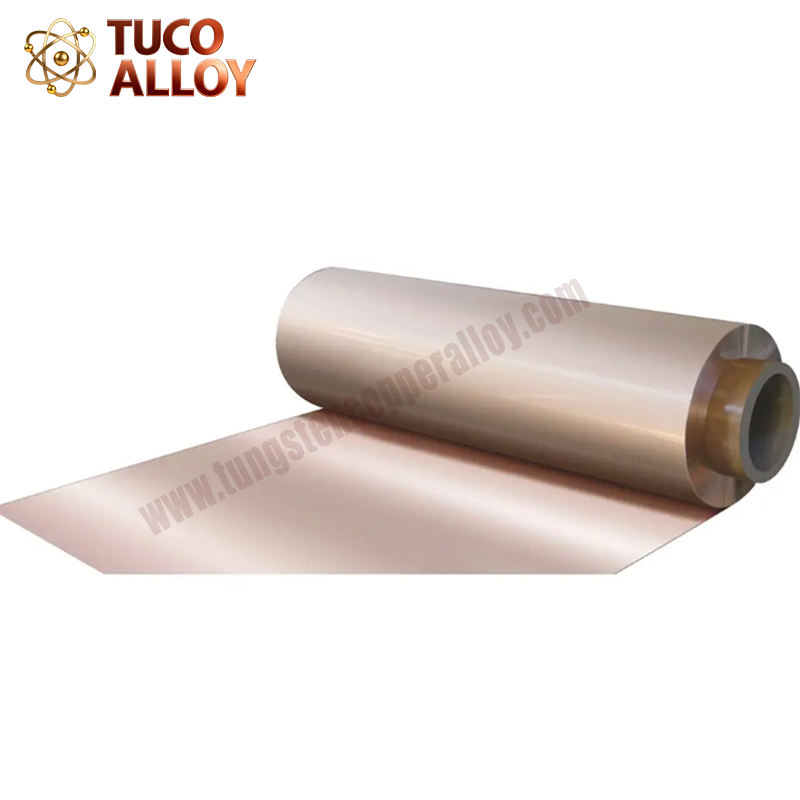
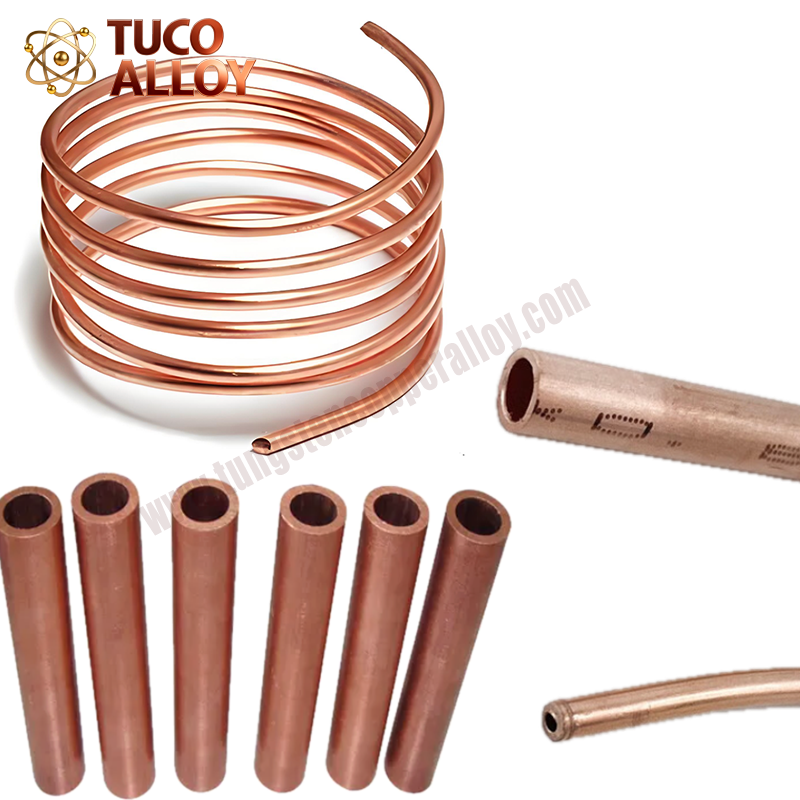
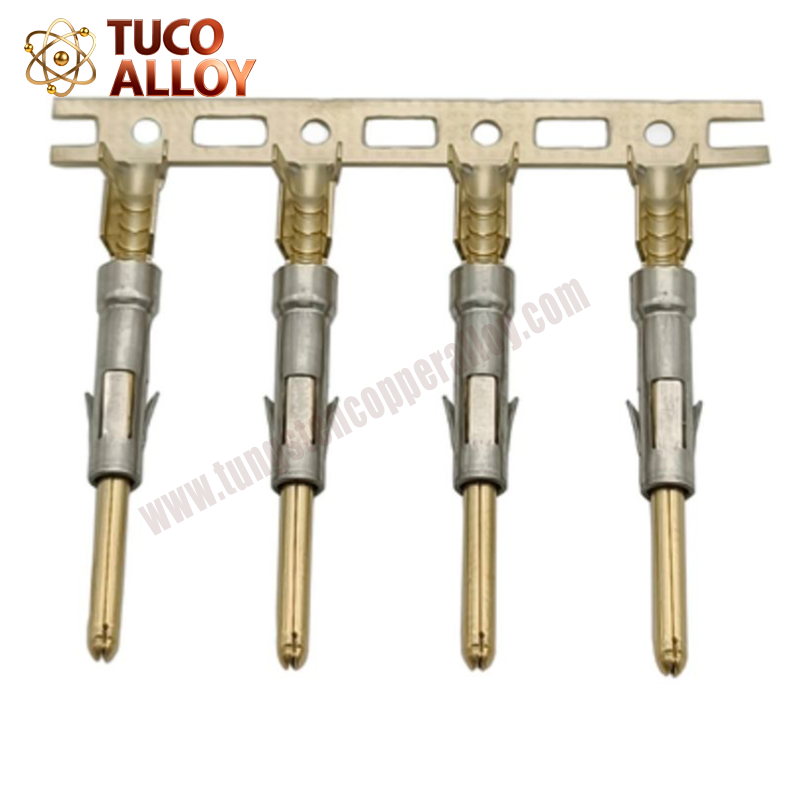
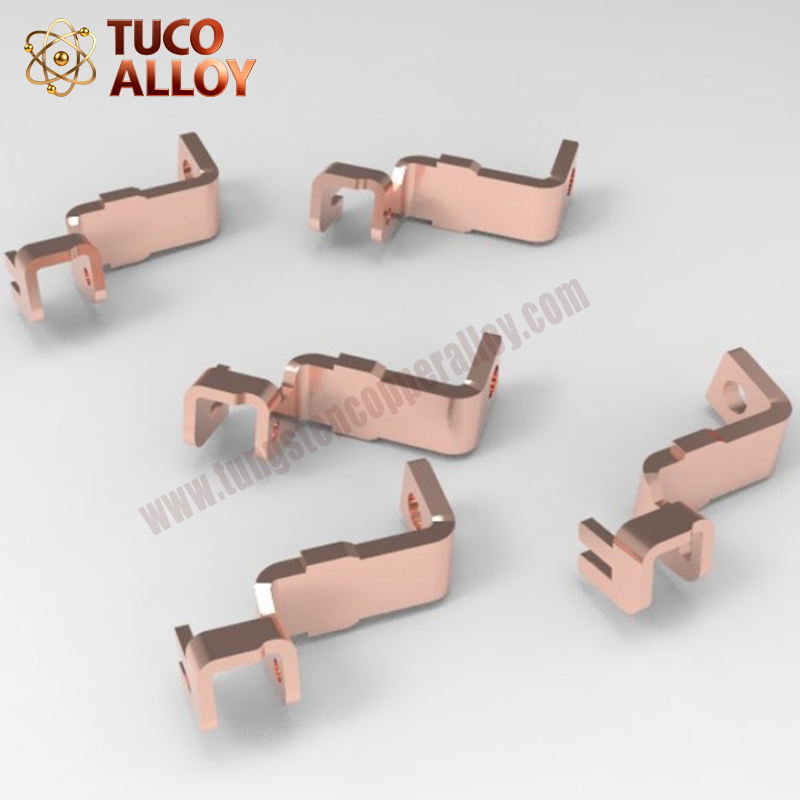
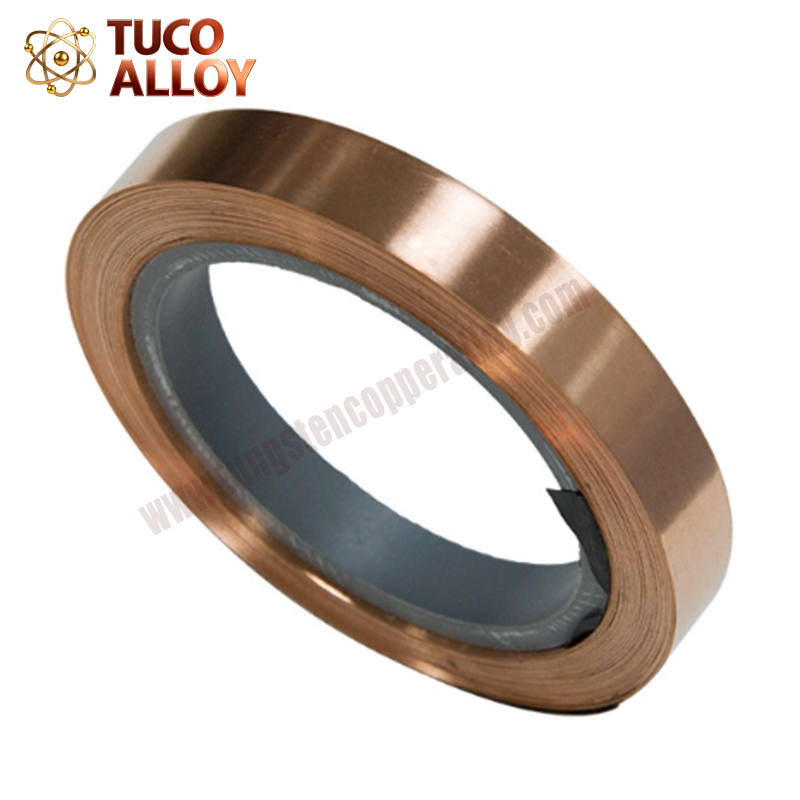
Tungsten Copper Resistance Welding Electrode
When performing arc welding with Plasma or Tungsten Inert Gas (TIG) as the shielded welding method, the tungsten copper resistance welding electrode becomes effective. In each case, the electrode, the arc, and the weld pool are shielded from the surrounding atmosphere by an inert gas. The reason a tungsten electrode is used is that tungsten can withstand extreme temperatures with very slight melting or erosion. The electrodes used in shielded welding are produced through powder metallurgy and formed to size after sintering.
Tungsten copper alloys are also used to manufacture die inserts, electrode facings, and weld flash butt dies. They are ideal for tools used in hot upsetting. The ability to solve heat balance problems makes them invaluable in the above applications. The combination of the alloy's high thermal and electrical conductivity with mechanical and physical refractory properties makes tungsten copper alloys ideal.
Properties Of Tungsten Copper Resistance Welding Electrode
| Item | Copper Content % | Density g/cm3 ≥ | Electric Conductivity IACS% %≥ | Hardness HB Kgf/mm2 ≥ |
| 50WCu | 50±2.0 | 11.85 | 54 | 115 |
| 55WCu | 45±2.0 | 12.3 | 49 | 125 |
| 60WCu | 40±2.0 | 12.75 | 47 | 140 |
| 65WCu | 35±2.0 | 13.3 | 44 | 155 |
| 70WCu | 30±2.0 | 13.8 | 42 | 175 |
| 75WCu | 25±2.0 | 14.5 | 38 | 195 |
| 80WCu | 20±2.0 | 15.15 | 34 | 220 |
| 85WCu | 15±2.0 | 15.9 | 30 | 240 |
| 90WCu | 10±2.0 | 16.75 | 27 | 260 |